Service 03
Industrial Selective Demolition
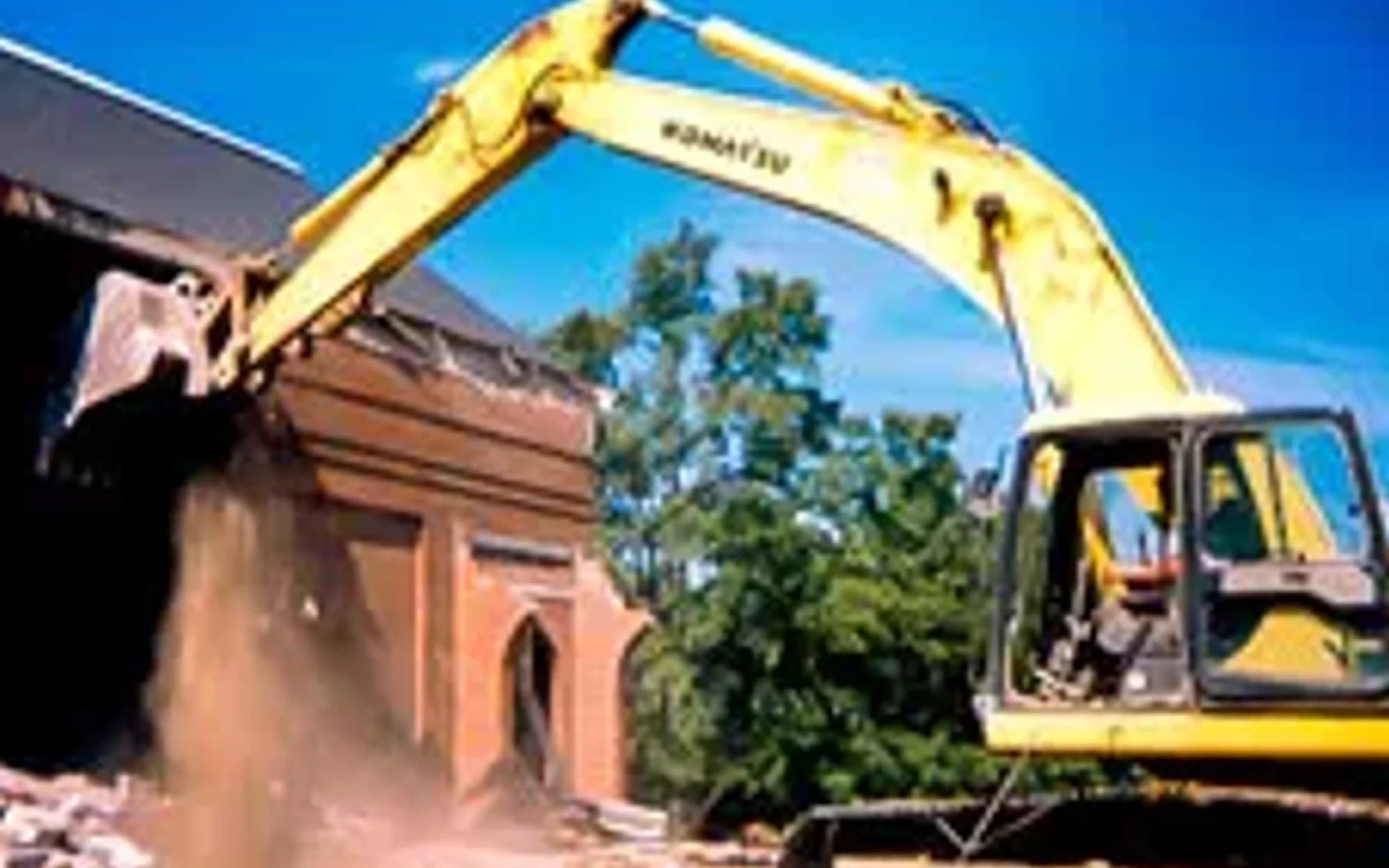
Selective demolition is removing a defined part of a structure while everything around it stays standing, loaded and in service. It is the work that separates a demolition contractor from a machine operator: the sequence, the temporary support and the load paths matter more than the breaking, because the building has to be as sound at the end of each day as it was at the start.
What the job covers
- Removing structural bays, floors, roofs, mezzanines and stair cores while the frame stays up
- Taking out process equipment, tanks, conveyors and platforms in working industrial buildings
- Temporary shoring and needling where loads have to be carried around the removal
- Openings cut through floors and walls for new stairs, shafts, lifts and services
- Weather protection where the envelope is opened up
- Working around live process, power and occupied areas
- Cut, rigged and lowered rather than dropped, where dropping is not an option
What affects the quote
- Whether the element coming out is carrying load, and what carries it instead
- Whether the building keeps operating during the work, and what cannot be interrupted
- Access for rigging — what can be craned, what has to come out in pieces through a door
- Vibration limits where sensitive equipment, historic fabric or an adjoining structure is close by
- Whether an engineer's sequence and temporary works design are required, which on most structural removals they are
- How much of the removal has to happen outside production or trading hours
Every job is quoted after we understand the site. Photographs of what needs to come down, and of how a machine would reach it, get you an accurate number faster than a description will.
Common questions
Before you call
Do I need a structural engineer?
If anything being removed carries load — a beam, a column, a bearing wall, a floor bay — then yes, and the building department will ask for the drawings before it issues a permit. Allied works to that engineer's sequence rather than around it. For non-structural removal, partitions and finishes, it is generally not required.
Can you work at night or on weekends?
Often it is the only way the job works, particularly in occupied commercial buildings and in industrial plants that cannot stop production. Municipal noise restrictions and the building's own rules set the actual window, so it is worth confirming both before the schedule is fixed.
Other services
Ready ToClear The Way?
Tell us about the project. Allied will take it from there.